Case Study — 10 / Independent Project / 2021
Fluid Dynamics CO2-Propelled Vehicle
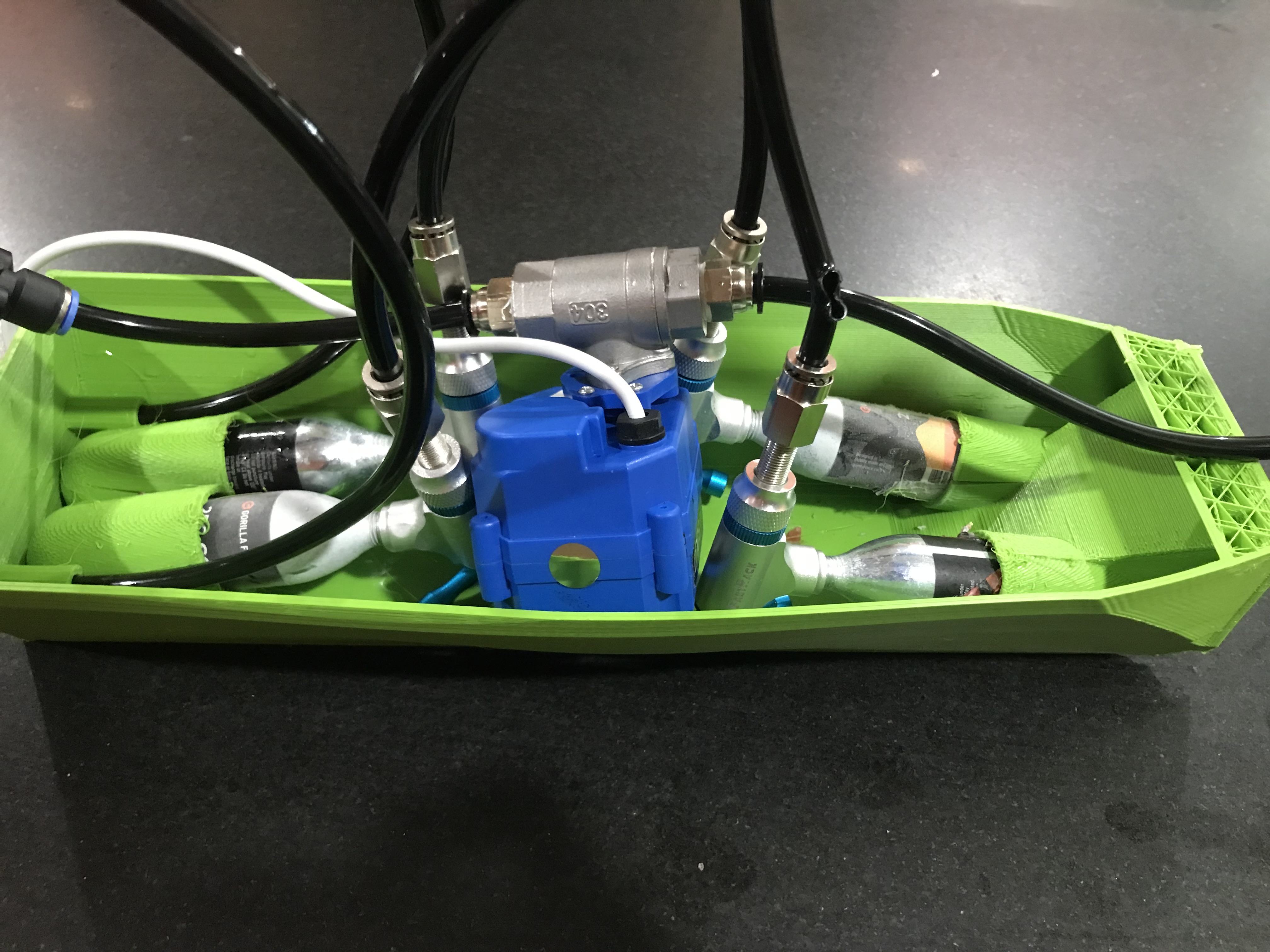
Engineered an aerodynamically and hydrodynamically optimized vehicle utilizing high-pressure gas propulsion and rigorous iterative prototyping.
Modeled and 3D printed a watercraft powered entirely by high-pressure CO2 cartridges. The project demanded a rigorous integration of fluid dynamics to minimize hydrodynamic drag, alongside mechanical engineering to safely contain the pressurized gas.
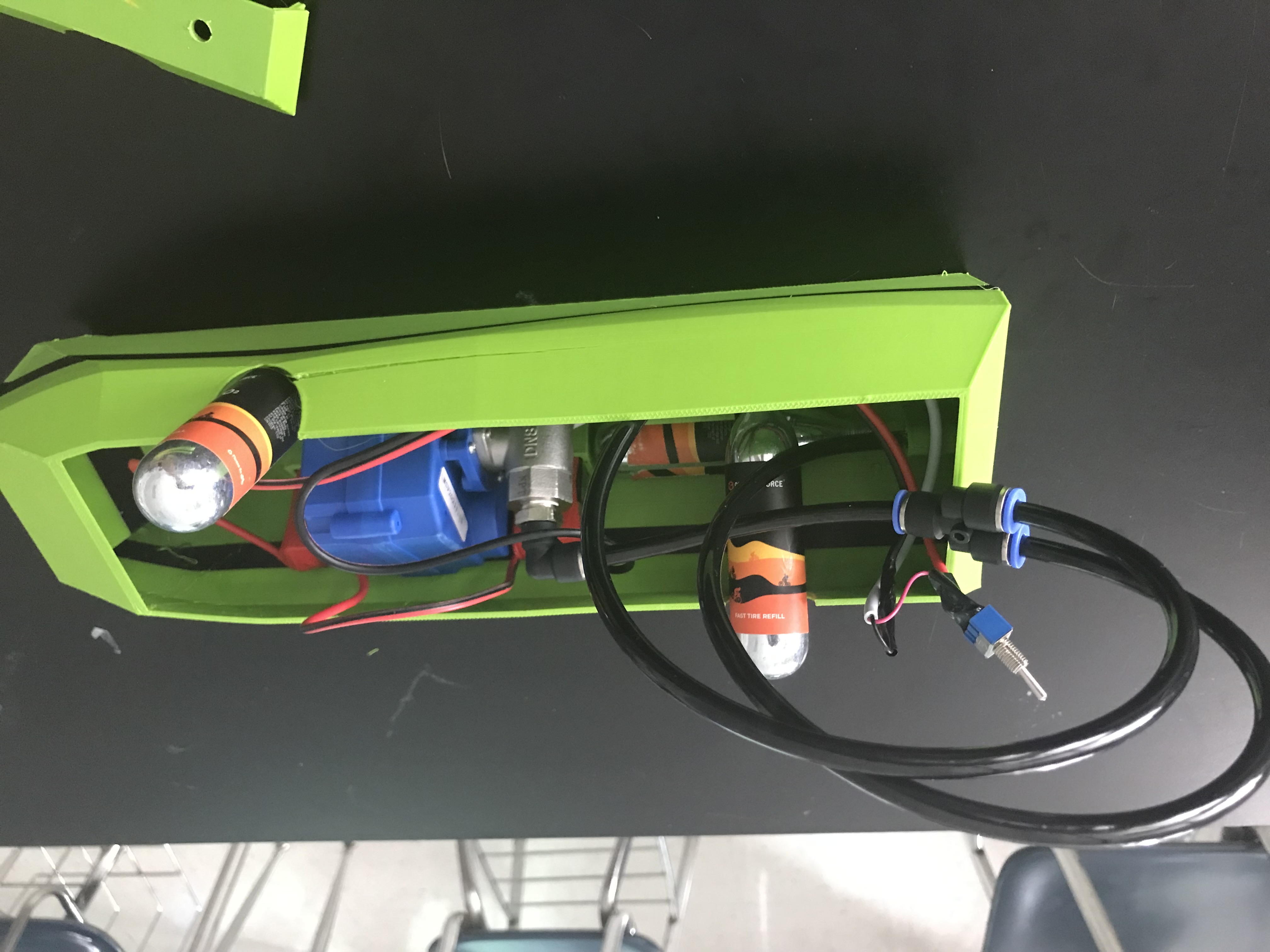
The propulsion system utilizes standard 8g or 16g CO2 cartridges paired with a quick-release valve for controlled launches and a safety pressure regulator to prevent overpressure. A critical element was designing a custom nozzle and pneumatic routing system utilizing tubing rated for 800+ PSI, engineered to optimize the thrust-to-weight ratio.
The final vehicle was the result of a highly systematic iterative design process. I began with theoretical CAD modeling in SolidWorks, calculating the expected forces and stresses on the tubing system before printing.
• Prototype 1: The initial design revealed severe instability during physical testing. The vessel was top-heavy and prone to capsizing, and the thrust vector was misaligned, causing the boat to spin rather than travel linearly. • Prototype 2: I structurally reorganized the internal components, reprinting the hull with a wider base and a significantly lowered center of gravity to enhance buoyancy and stability. The tubing routing was also redesigned to improve internal flow. • Final Design: Through continuous reprinting and empirical testing, the final iteration achieved an optimized hull shape and perfect thrust vector alignment, allowing for maximum propulsion efficiency.
• Pressure Containment: Securing 800+ PSI tubing to standard FDM 3D-printed plastic components required careful engineering of reinforced mounting points and integrated strain relief to prevent catastrophic blowout. • Thrust Alignment: Ensuring the high-velocity thrust vector perfectly aligned with the vessel's center of hydrodynamic resistance was critical to prevent spinning and achieve straight-line acceleration.
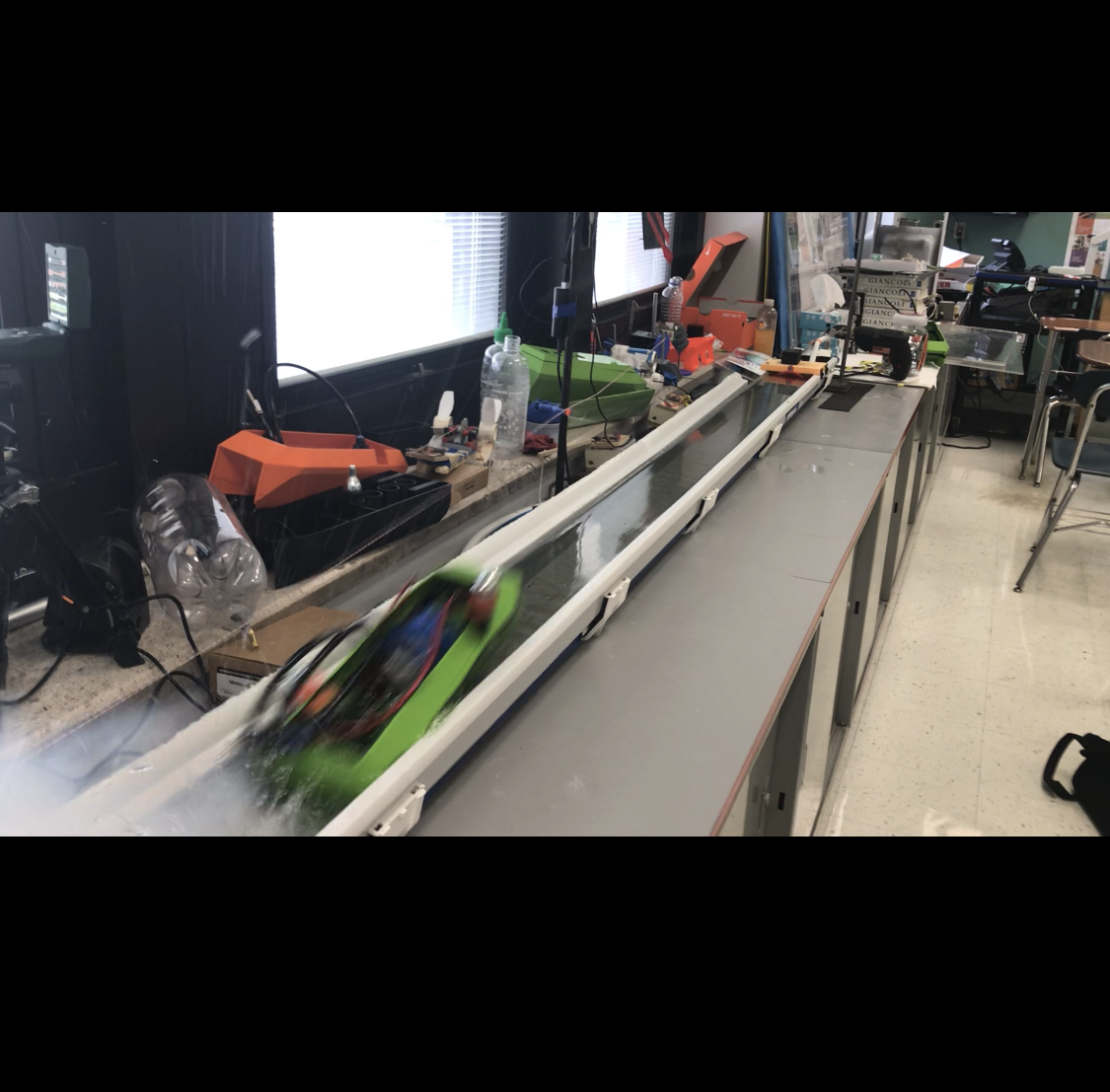
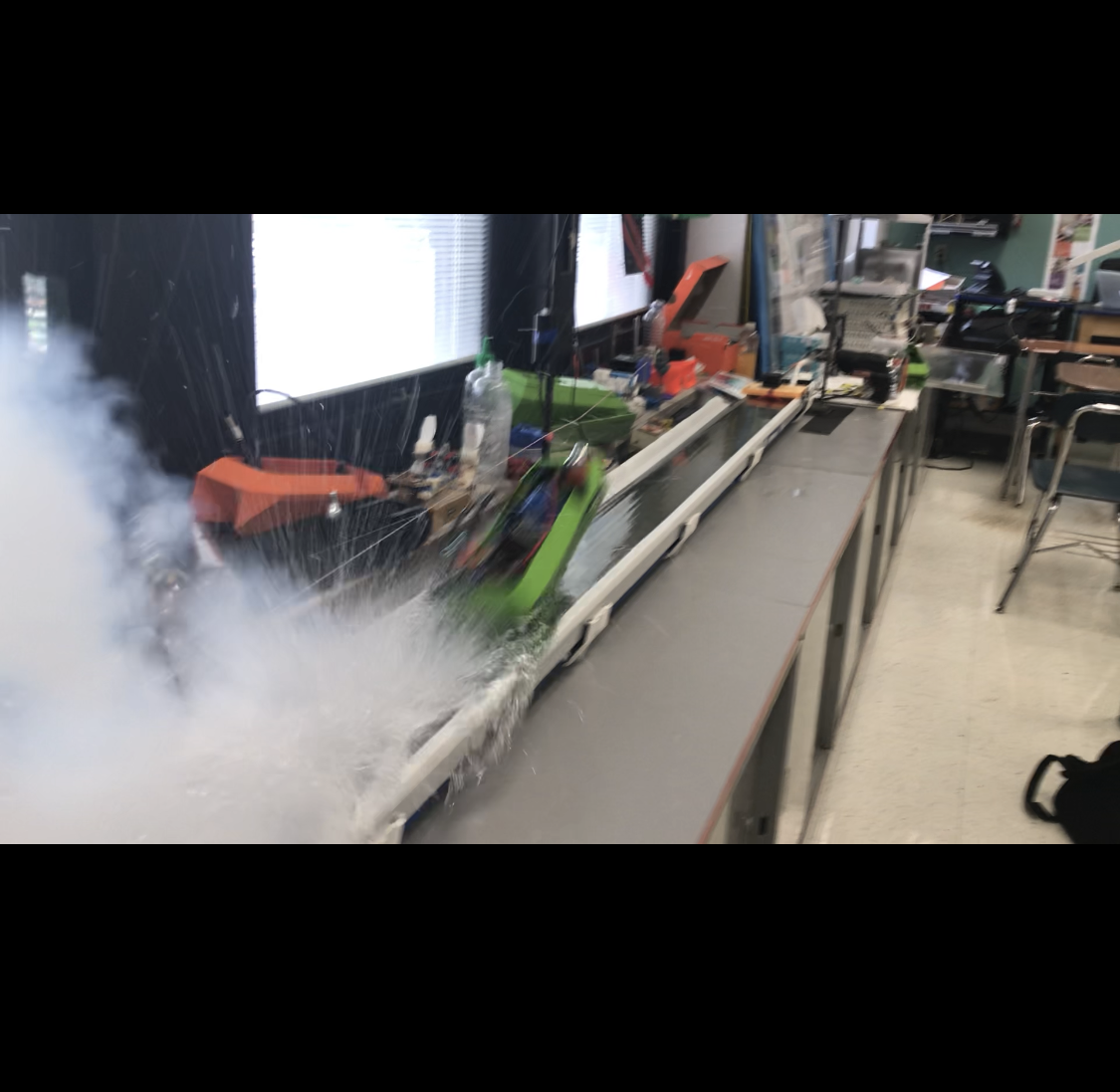
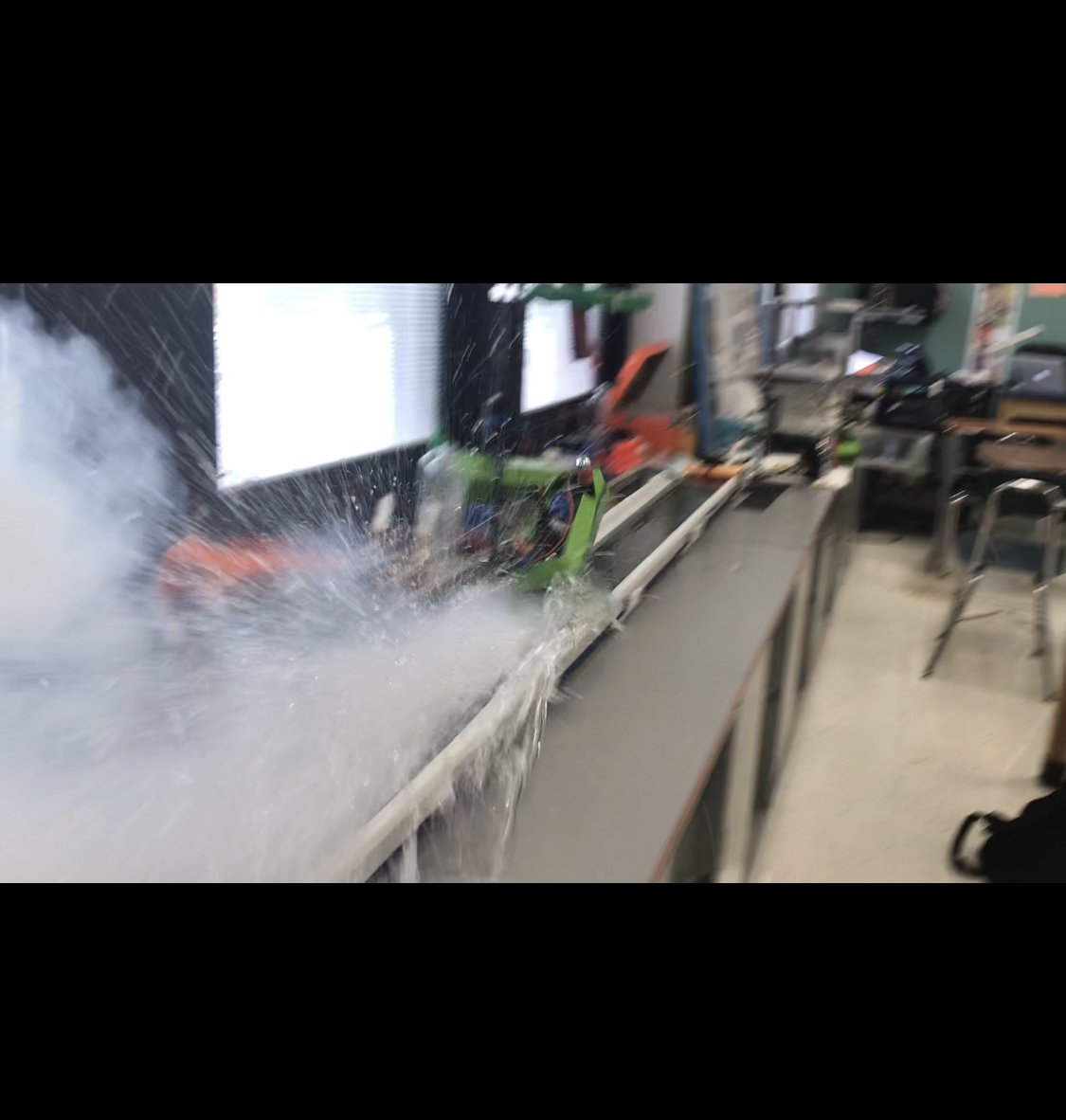
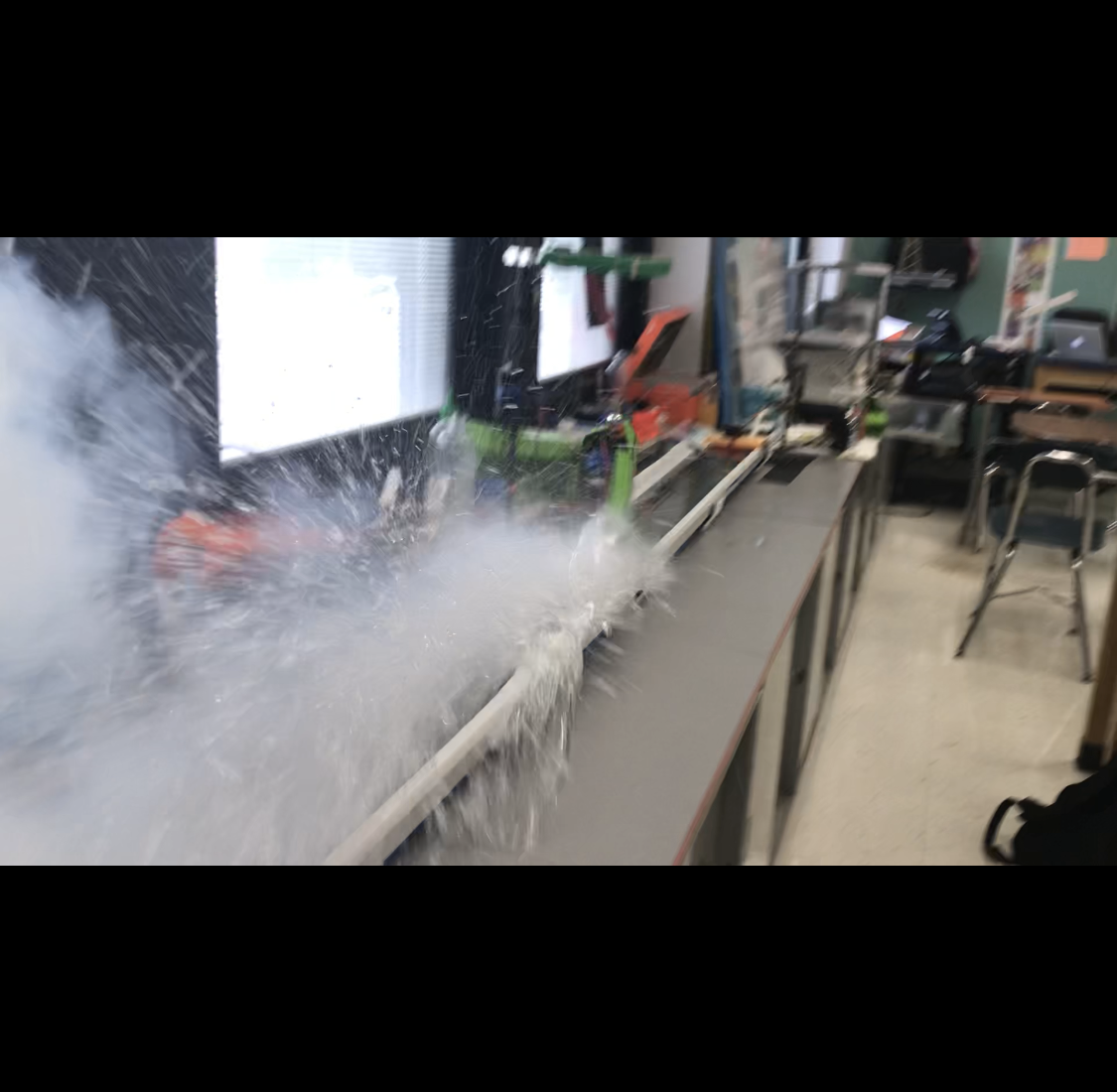
The final optimized vessel successfully demonstrated stable, straight-line travel across multiple consistent launches. The vehicle achieved travel distances exceeding 30 feet per single CO2 cartridge, with peak velocities estimated between 5-8 mph.
Next Project — 16